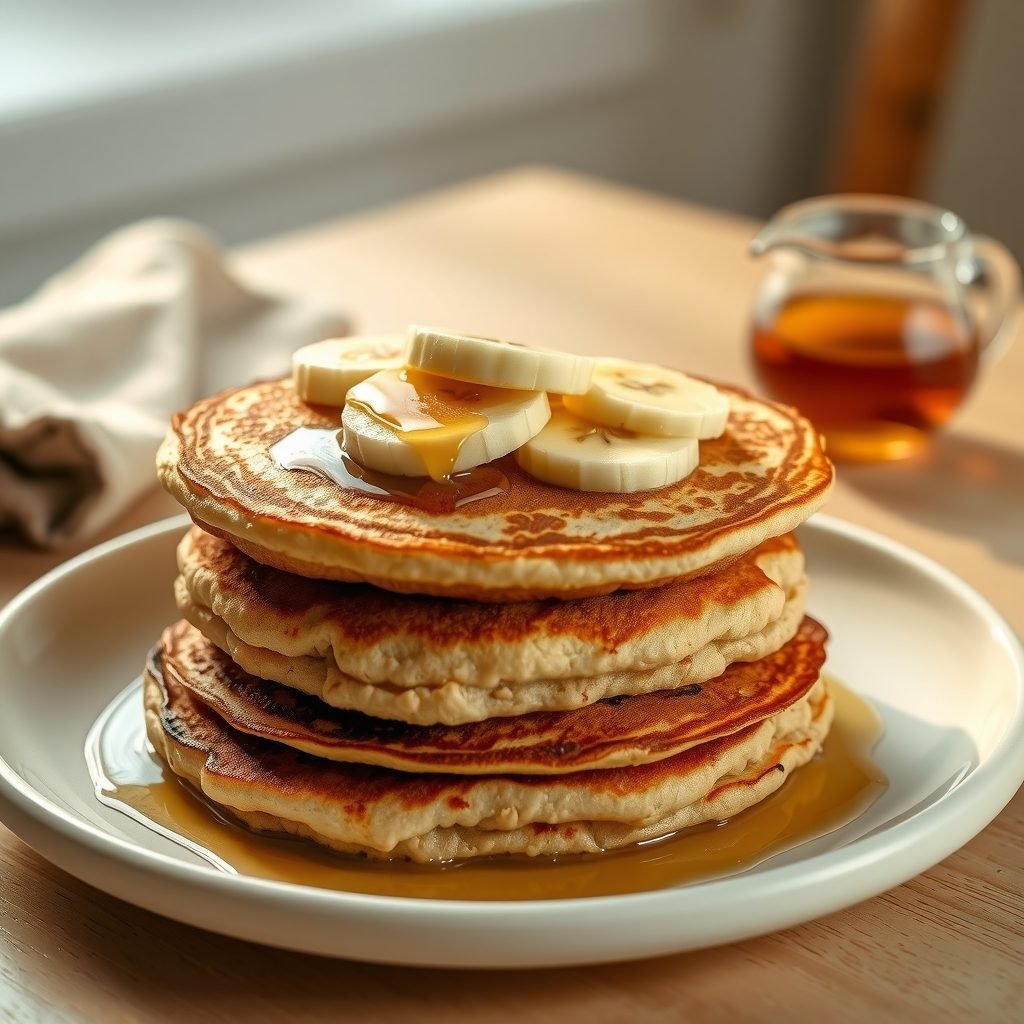
Cottage cheese oatmeal protein pancakes come together in a blender: oats, cottage cheese, eggs and a ripe banana become tender, golden pancakes. This version adds what most recipes skip: a visual test for batter thickness, doneness cues for these wet batters and a true 3-ingredient option.
Can you mix cottage cheese and oatmeal together? Yes. Blend rolled oats with cottage cheese, eggs and a little banana into a smooth batter. The cheese adds moisture, the oats add body, and a 5-minute rest lets the batter thicken. Cook on medium-low heat so the centers set.
Plan on about 20 minutes plus the rest for 12 pancakes, and they freeze well too. The recipe card at the end has exact amounts and metric weights.
Key Takeaways
Total time: 25 min · Makes: 12 pancakes (6 servings of 2; about 8 g protein per serving, estimated) · Batter rest: 5 min
- Blend until no curds remain, then rest the batter 5 minutes so the oats thicken it.
- Cook on medium-low heat, about 300 to 325°F (150 to 160°C), and flip only when the edges look dry and set.
- Each pancake has roughly 4 g of protein, so a serving of two gives about 8 g.
- Cooked pancakes freeze for up to 2 months and reheat straight from the freezer.
Why This Batter Gives Soft, Tender Pancakes
Blended cottage cheese gives a pancake moisture and a tender, almost custardy crumb. That is why these pancakes stay soft without a butter-heavy batter or any flour.
Rolled oats supply body and absorb liquid, which turns a loose blend into a pourable batter. Eggs and cheese proteins set as they heat, so they provide the structure flour normally would.
One catch: the milk solids in cottage cheese brown quickly. Keep the heat moderate so the outside turns golden at the same pace the inside sets.
Cottage Cheese Oatmeal Protein Pancakes: Ingredients, Roles and Swaps
Each ingredient has a clear job, and most have an easy swap. The recipe card lists exact amounts.
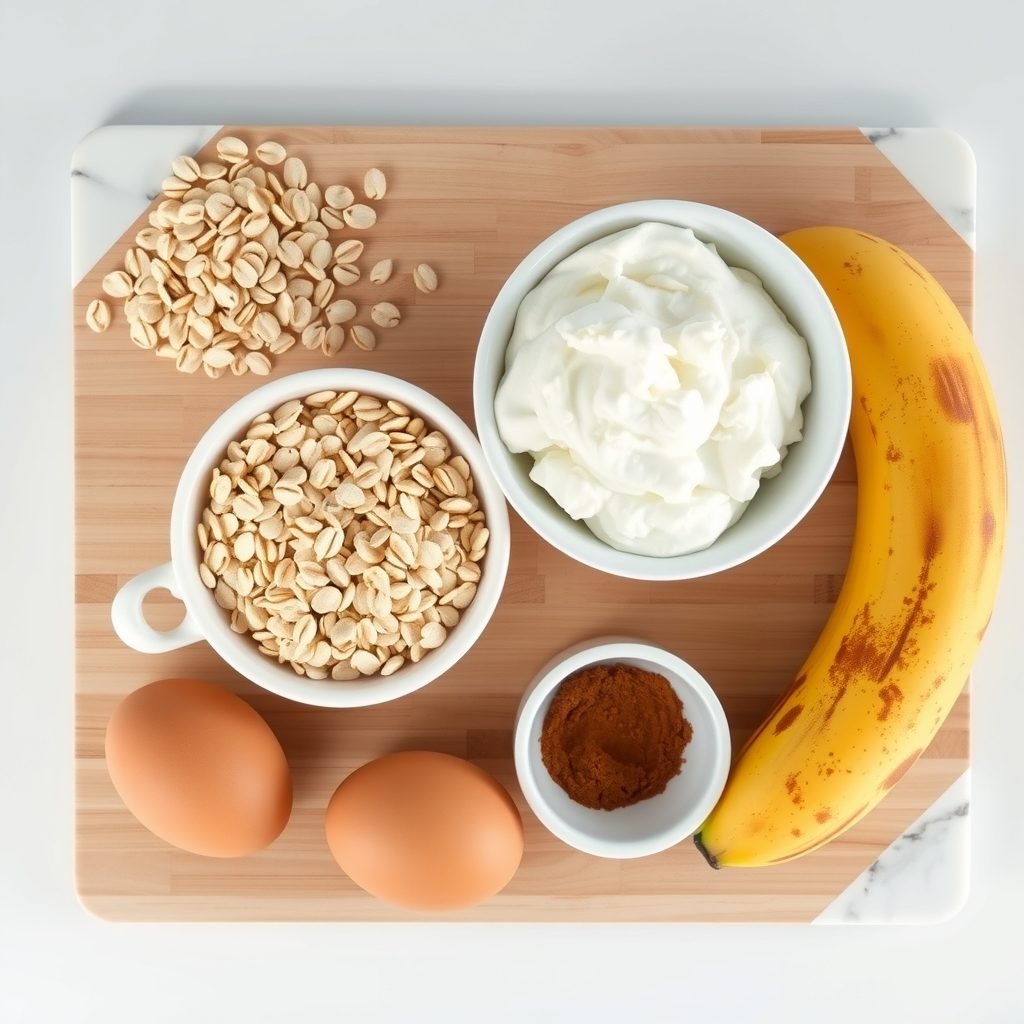
- Rolled oats: old-fashioned oats give structure. Quick oats work as-is, and grinding them to oat flour gives a smoother, softer crumb, like oat flour protein pancakes.
- Cottage cheese: choose 4% or 2% for tenderness. Fat-free makes a drier pancake.
- Eggs: large eggs set the pancake and add protein.
- Ripe banana: adds sweetness and binds the batter. For a banana-free version, use 2 tablespoons unsweetened applesauce plus 1 tablespoon honey or maple syrup.
- Baking powder, vanilla, cinnamon and salt: the baking powder adds a little lift. The amount is small because eggs and blended cheese already help the wet, oat-based batter rise, and too much can taste bitter.
- Vanilla protein powder (optional): replace 2 tablespoons of the oats and add a splash of water.
- Water: use it only to adjust thickness, 1 tablespoon at a time.
Together these make the classic cottage cheese banana oatmeal protein pancakes.
How the Ingredients Keep You Full
Cottage cheese and eggs add protein, and whole rolled oats add fiber, which is why these pancakes feel more filling than a plain flour stack. Vanilla protein powder is optional, not required.
Allergens: the recipe contains milk and eggs. Oats can pick up wheat or gluten in processing, so choose certified gluten-free oats if that matters to you, and note that the no-oat version uses wheat flour.
You can find more high-protein pancake recipes if you want other ideas.
Batter Texture and Cooking Cues
Fluffy cottage cheese pancakes depend on two things you can see: a smooth, properly thick batter and a pan that stays at medium-low heat.
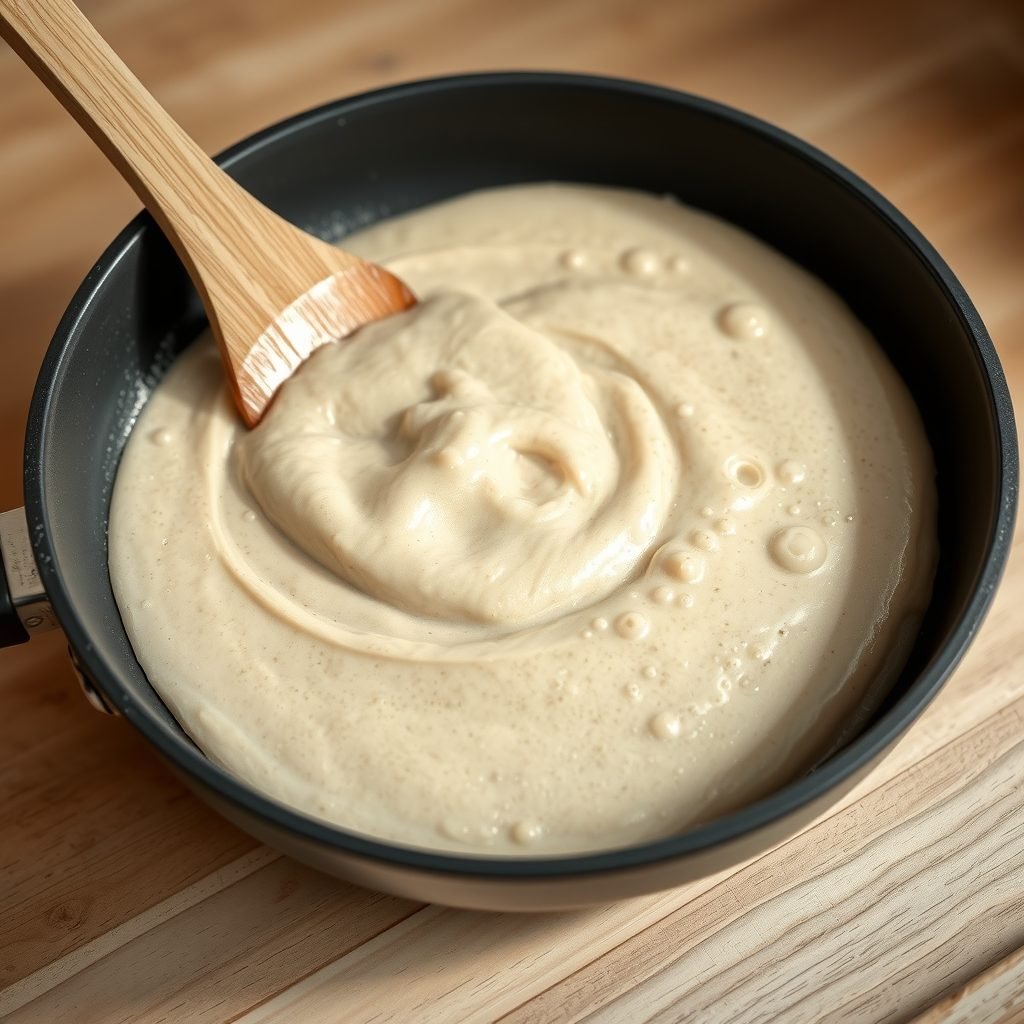
How smooth and how thick the batter should be
- Blend everything for about 1 minute, until no curds remain when you tilt the blender jar.
- Rest the batter for 5 minutes so the oats absorb liquid and thicken it.
- Drag a spoon through the batter. The pour mark should hold for a few seconds before slowly closing.
- If it is too thick, stir in water 1 tablespoon at a time. If it is too thin, blend in 1 to 2 tablespoons oats and rest 2 more minutes.
Heat, pour size and the flip cue
- Heat a nonstick griddle or cast-iron skillet over medium-low, about 300 to 325°F (150 to 160°C) or the lowest medium-low setting that keeps the pan sizzling, and grease it lightly. Griddles vary and so do stove dials, so use the first pancake as your test.
- Pour about 1/4 cup (60 ml) batter per pancake, which spreads 3 to 4 inches wide.
- Flip when the edges look dry and set and bubbles pop and stay open, about 2 to 3 minutes.
- Cook 1 to 2 minutes more, until the center springs back when pressed. A wet center means the heat is too high.
- Cook to a safe internal temperature of 160°F (71°C), as the UConn guide to cooking egg dishes advises. Keep finished pancakes on a rack in a 200°F (95°C) oven.
Pro Tip
Browned but wobbly? Slide the pan off the heat for 30 seconds and lower the burner. The center catches up without burning the surface.
3-Ingredient Cottage Cheese Pancakes (and the 2-Ingredient Shortcut)
3 ingredient cottage cheese pancakes skip the banana and flavorings, leaving just oats, cottage cheese and eggs. They are a quick base when the pantry is bare.
How to make 3 ingredient protein pancakes
- Blend 1/2 cup (45 g) rolled oats, 1/2 cup (113 g) cottage cheese and 2 large eggs until smooth, about 1 minute.
- Optional: add a pinch of salt or a little baking powder; the core recipe stays at three ingredients.
- Rest 5 minutes, then cook as above on medium-low heat. For this smaller batch, make smaller pancakes with 2 to 3 tablespoons of batter each.
How the texture changes
With less oat and no banana, the pancakes are softer, more eggy and more delicate. Make smaller 2- to 3-inch pancakes and cook them a little longer on lower heat.
For the 2-ingredient version, blend only eggs and cottage cheese: use 2 large eggs and 1 cup (225 g) cottage cheese. The result is very tender and custardy, and it needs a careful flip with a thin spatula.
Common Problems and Fixes
Because the batter is wetter than flour batter, most failures come down to heat and thickness. Use this table to fix pancakes that go wrong.
| Problem | Likely cause | Fix |
|---|---|---|
| Wet in the middle or gummy | Heat too high or batter too thin | Lower the heat, blend in a spoonful of oats and cook 1 to 2 minutes longer. |
| Sticking or tearing | Pan not hot enough or too little fat | Preheat fully and re-grease between batches. |
| Visible curds or lumps | Under-blended batter | Blend longer, until smooth. |
| Dense and heavy | Batter too thick | Thin with water, 1 tablespoon at a time. |
| Will not flip | Pancake too large or edges not set | Pour smaller pancakes and wait for dry, set edges. |
| Brown outside, raw inside | Heat too high | Reduce to medium-low and extend the cook time. |
Cottage Cheese Pancakes Without Oats, Other Swaps and Toppings
The base is flexible, so you can drop the oats, make bites or change the toppings.
No-oat version
For cottage cheese pancakes without oats, replace the oats with 1/4 cup (31 g) all-purpose flour or protein powder. The batter is thinner than the oat version, so use low heat and cook a little longer. For a banana-free swap, see the ingredient section above.
Bite-size pancakes
For cottage cheese oat protein pancake bites, pour 1-tablespoon rounds into a small pan and cook about 1 to 2 minutes per side. They suit meal prep and small hands.
Toppings
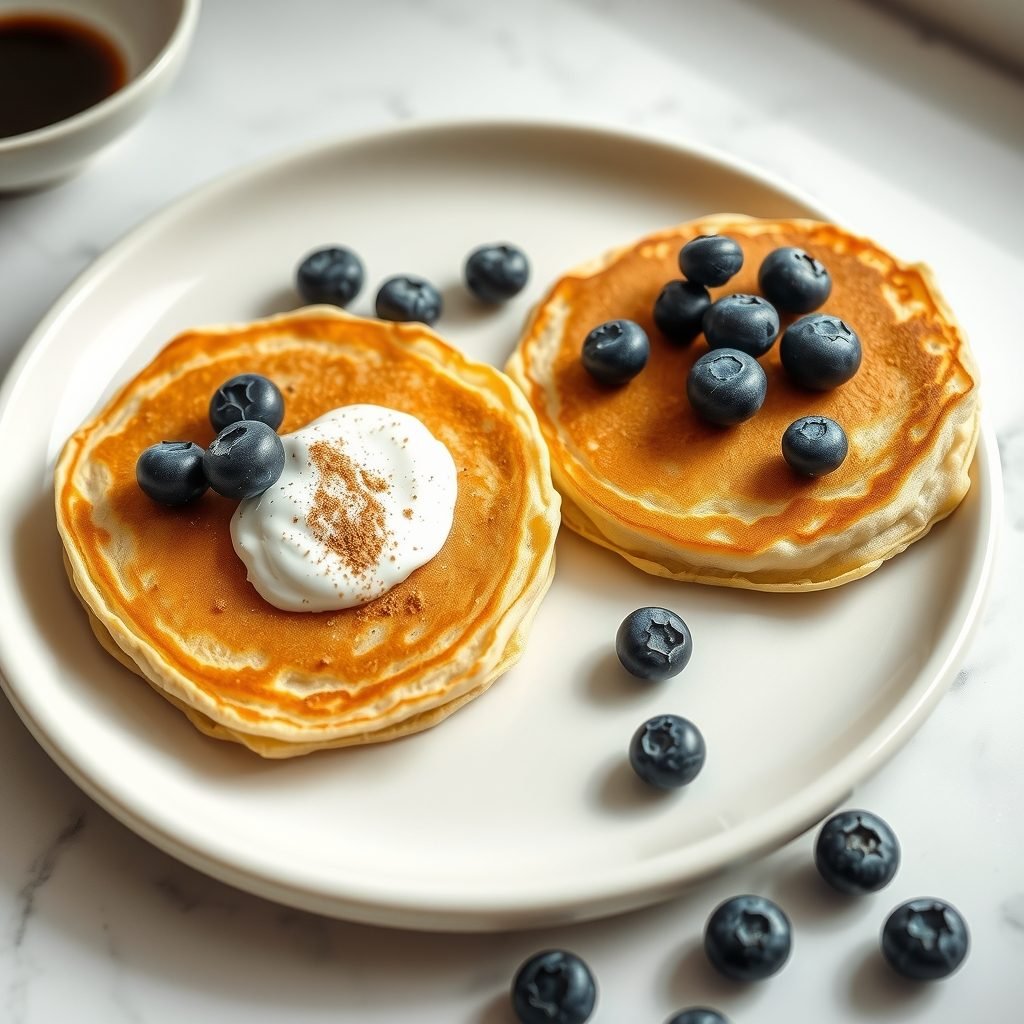
- Greek yogurt with berries: a tart contrast.
- Nut butter: melts into the warm pancakes.
- Sliced banana with cinnamon: natural sweetness.
- Warm strawberry sauce or a drizzle of maple syrup: a classic finish.
For more pancake ideas, browse the healthy fitness pancake recipes category.
Make-Ahead, Freezing and Reheating
Cooking ahead suits these pancakes, so make a double batch for the week.
- Refrigerator: cool completely, then store in an airtight container for 3 to 4 days.
- Freezer: freeze in a single layer, then bag with waxed paper between pancakes for up to 2 months. Use the freezer bag tips for cooked food to help prevent freezer burn.
- Reheating: toast or microwave from frozen until steaming hot throughout.
- Batter: keeps up to 24 hours in the refrigerator. It thickens, so stir in a little water.
Good to Know
Raw batter contains raw egg and raw oats, so do not taste it before cooking.
Frequently Asked Questions
What does cottage cheese do in these pancakes?
It adds protein, moisture and a tender crumb. Blended smooth, it also helps the pancakes rise slightly. It browns quickly because of its milk solids, so cook over medium-low heat and judge by dry edges, not the clock.
Can you make cottage cheese pancakes without oats?
Yes. Keep the cottage cheese and egg base and add about 1/4 cup flour or protein powder for structure. The batter is thinner than the oat version, so cook on lower heat, make smaller pancakes and let them set fully before flipping.
Why are my pancakes wet in the middle?
The batter is usually too thin or the pan too hot. Blend in a spoonful of oats and lower the heat. Flip only when the edges are dry and set, then cook until the center springs back.
Can I use quick oats or oat flour instead of rolled oats?
Yes. Quick oats work as-is. Ground oats make a smoother, softer pancake, but they absorb more liquid, so you may need a splash more water. Check that the pour mark holds for a few seconds.

Cottage Cheese Oatmeal Protein Pancakes
Ingredients
Equipment
Method
- Add the oats, cottage cheese, eggs, banana, baking powder, vanilla, cinnamon and salt to a blender.
- Blend for about 1 minute, until no curds remain when you tilt the jar.
- Rest the batter for 5 minutes so the oats absorb liquid and thicken it.
- Drag a spoon through the batter. If the pour mark closes instantly, blend in 1 to 2 tablespoons oats. If it holds for a few seconds, it is ready. If the batter is too thick, stir in 1 tablespoon water at a time.
- Preheat the oven to 200°F (95°C) and set a wire rack on a baking sheet.
- Heat a nonstick griddle or cast-iron skillet over medium-low, about 300 to 325°F (150 to 160°C), and grease it lightly.
- Pour 1/4 cup batter per pancake, leaving space so each spreads to 3 to 4 inches.
- Cook until the edges look dry and set and bubbles pop and stay open, about 2 to 3 minutes.
- Flip and cook 1 to 2 minutes more, until the center springs back. If the center looks wet, lower the heat.
- Check that the center reaches 160°F (71°C), then move the pancakes to the rack in the oven.
- Re-grease the pan lightly between batches and repeat with the remaining batter.
