
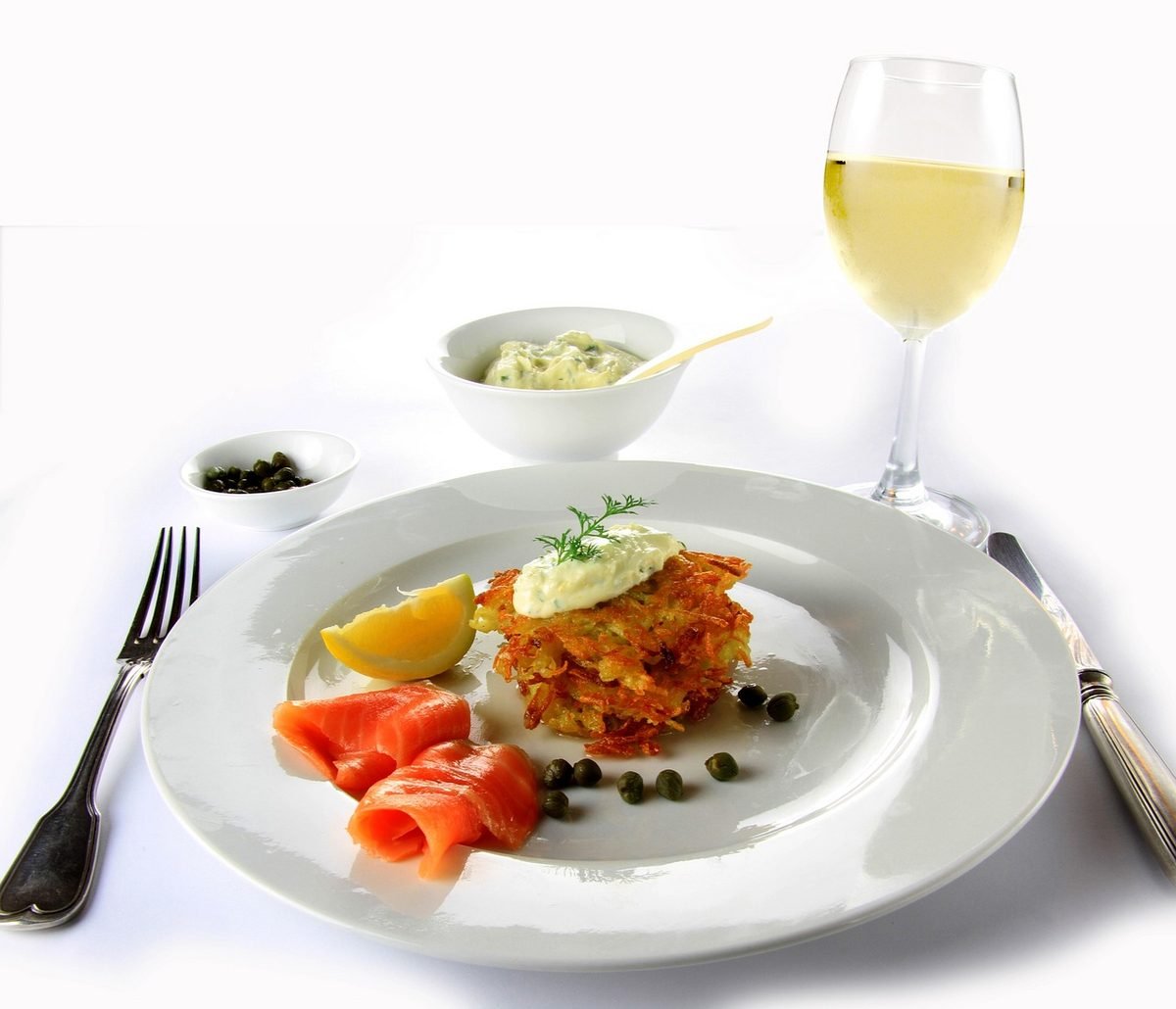
Great smoked salmon potato pancakes come down to three things: dry potato, hot oil and cold salmon added at the very end. The same rules apply to any version of potato pancakes with smoked salmon, so you can fix a limp batch at its source.
To keep potato pancakes from getting soggy, squeeze the grated potatoes dry in a clean towel, keep the batter minimal, and fry in a single layer in 350-375°F oil. Drain on a wire rack, never paper towels or a stack. Hold them in a 200-225°F oven on a rack, and add salmon and cream only at serving.
It is a smoked salmon take on latkes: about 50 minutes, 12 pancakes, 6 servings. Use the card below for exact amounts and metric weights.
Key Takeaways
Total time: 50 min · Makes: 12 pancakes (6 servings, 2 per person)
- Squeeze grated potato until only a few drops come out of the towel.
- Fry in 350-375°F oil, about 1/2 inch thick, in a single layer.
- Drain and hold pancakes on a wire rack in a 200-225°F oven, never stacked.
- Top with cream and cold salmon only at serving to keep contrast.
Why These Smoked Salmon Potato Pancakes Turn Out Crisp
Russet potatoes are high in starch, and that starch is the glue that binds the shreds and browns into crisp, lacy edges. Water works against it: moisture steams the pancake from inside and dilutes the starch, so squeezing matters more than any binder. The egg and a little flour only hold the shreds together.
The payoff is contrast. Smoked salmon potato pancakes work because a hot, crunchy pancake meets cool cream and cold, silky salmon in each bite. Smoked salmon potato latkes follow the same idea, built on the shredded-potato base of the Hanukkah tradition, with a cold topping added at the end.
Ingredients and What Each One Does
Each item below earns its place for smoked salmon potato pancakes, and the swaps show what changes. The printable recipe card has the exact amounts and metric weights.
| Ingredient | Amount | Role | Swap |
|---|---|---|---|
| Russet potatoes and small yellow onion | About 2 lb (4 medium) and 1 onion, grated | Starch for binding and crisp edges; onion adds flavor | Yukon Golds give a softer, less crisp result |
| Egg and all-purpose flour | 1 large egg and 3 tbsp (23 g) flour | Binder that holds the shreds together | Potato starch or rice flour, same amount, for gluten-free |
| Kosher salt, pepper, fresh dill | 1 tsp, to taste, 1 tbsp chopped | Seasoning and herb flavor | Chives for a milder note |
| Vegetable or canola oil | About 1/4 inch deep | Even, high-heat frying | Add 1 tbsp butter for flavor |
| Crème fraîche, lemon, dill | 3/4 cup, with 1 tbsp dill, lemon juice and a pinch of salt | Cool dill cream sauce for potato pancakes | Sour cream |
| Cold-smoked salmon, capers, chives, red onion, lemon zest | 8-10 oz salmon, plus toppings | Silky, salty topping | Hot-smoked salmon, flaked |
For more herb-forward options beyond dill, browse these savory herb pancake ideas.
How to Make Smoked Salmon Potato Pancakes Step by Step
The method is short, but two checks decide the result: how dry the potato is and how hot the oil is. These pancakes reward patience at both.
How to squeeze water out of grated potatoes
Grate the potato and onion on a box grater or food-processor disc. Wring them in batches in a clean kitchen towel or cheesecloth until only a few drops come out.
- Optional starch rescue: let the squeezed liquid settle for a minute, pour off the water and return the white starch paste at the bottom to the bowl.
- Mix fast: stir in the egg, flour, salt and dill right away so the potato does not oxidize and turn gray.
Sizzle test: is the oil ready?
Aim for an oil temperature of 350-375°F in a cast-iron skillet over medium-high heat. Without a thermometer, drop in one shred: it should sizzle steadily within a couple of seconds without smoking.
- Scoop about 1/4 cup of batter into the oil and press it to 1/2 inch thick, leaving space between pancakes.
- Fry a test pancake first to check seasoning and heat.
- Cook 3-4 minutes per side until deep golden with lacy dark edges. Flip once, when the edges release and look browned.
- Drain on a wire rack over a tray and sprinkle with flaky salt at once.
- Between batches, wipe out burnt bits and top up the oil.
Pro Tip
If the edges darken before the center cooks, lower the heat a notch rather than flipping early.
5 Common Mistakes With Potato Pancakes and Their Fixes
Most failures with smoked salmon potato pancakes trace back to water, heat or timing. Here are the common mistakes with potato pancakes, with the fix for each.
| # | Problem | Likely cause | Fix |
|---|---|---|---|
| 1 | Soggy or limp | Wet potato | Squeeze again and drain on a rack |
| 2 | Gray or brown batter | Oxidation | Grate just before frying and mix fast; onion and a little lemon help |
| 3 | Greasy | Oil too cool or pan crowded | Use the sizzle test, 350-375°F, one layer only |
| 4 | Burnt outside, raw inside | Heat too high or pancakes too thick | Lower the heat and press to 1/2 inch |
| 5 | Falling apart | Too wet, too little binder or flipped early | Squeeze again, add 1 extra tbsp flour beyond the 3 tbsp, and wait for a crisp underside |
Do not salt the grated potatoes and leave them sitting, because salt pulls out water and leaves a puddle. Once the technique is steady, try all savory pancake recipes for other styles.
How to Keep Potato Pancakes Crisp for a Brunch Crowd
Knowing how to keep potato pancakes crisp is mostly about airflow and heat. Crispness fades as the pancakes steam, so hold them for no more than about 30 minutes, and expect results to vary with potato moisture.
- Hold: set the oven to 200-225°F with a wire rack on a sheet pan. Keep smoked salmon potato pancakes in one layer, never stacked, for up to 30 minutes.
- Make ahead: fry until just golden, cool on a rack, then refrigerate in a single layer in an airtight container up to 3 days.
- Reheat: bake on a rack at 400-425°F for 5-8 minutes until steaming hot, about 165°F inside.
- Freeze: freeze flat on a tray, then bag. Reheat from frozen at 425°F for 10-12 minutes.
- Skip the microwave: it turns them rubbery.
Good to Know
Add cream and salmon only at the last moment so the salmon stays cold. See Illinois Extension reheating leftovers to 165°F for safe leftover handling.
How to Serve and Top Them
Serve 2 smoked salmon potato pancakes as a main, 1 as a starter, or make bite-size minis for a party. Order matters more than garnish.
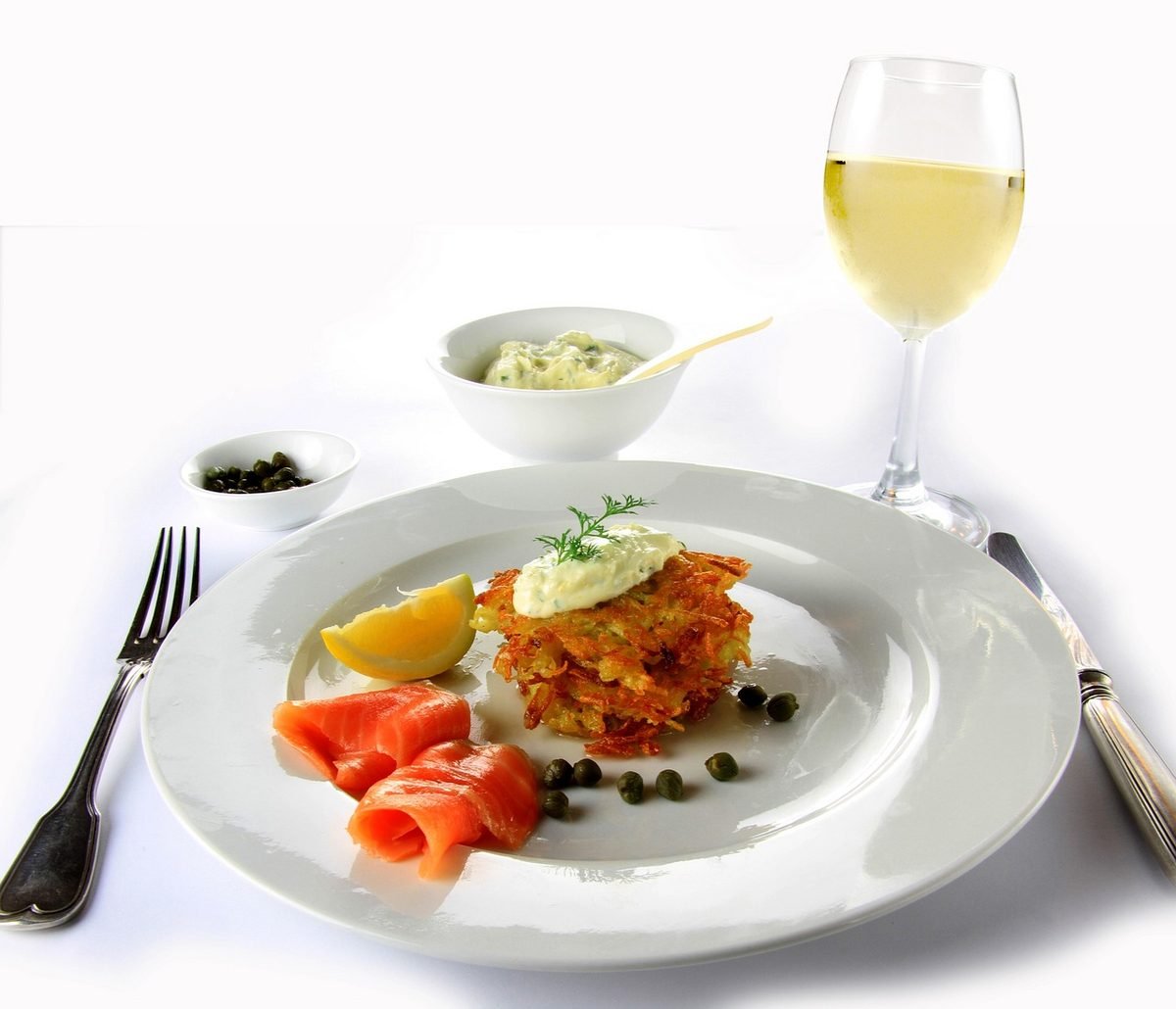
Plating order: hot, creamy, cold
Set a hot, crisp pancake on the plate, add a spoonful of dill cream, then a folded ribbon of cold salmon, then the garnish. Keep the salmon refrigerated until plating so it does not warm, sweat or dry out. Leave it out no longer than about 2 hours, or 1 hour in a hot room.
Good to Know
Pregnant people and other high-risk groups should follow the FDA listeria risk assessment questions and answers for refrigerated smoked seafood.
Toppings and brunch sides
- Toppings: capers, 1/4 cup thinly sliced red onion, chives, 1 tsp lemon zest and 2 tbsp salmon roe if you like.
- Salmon style: cold-smoked (lox style) is silkier, while hot-smoked salmon flakes into a rustic topping.
- Sides: a peppery arugula salad with lemon, soft scrambled eggs or fruit.
For a full spread, see these more brunch pancake recipes. The smaller minis also work well for a party: use 2 tbsp of batter each for about 24 bites.
Frequently Asked Questions
Why do my smoked salmon potato pancakes fall apart?
Usually the potato is too wet, the binder is too thin or the pancake was flipped early. Squeeze the grated potato again until only a few drops come out, and return the settled starch paste to the bowl. Add 1 extra tbsp flour beyond the 3 tbsp if the batter still looks loose, then wait for a crisp underside before flipping.
Can smoked salmon potato pancakes be made ahead and reheated?
Yes. Fry the pancakes until golden, cool them on a rack, and refrigerate up to 3 days. Reheat on a rack in a 400-425°F oven until steaming hot. Add the salmon and cream only at serving so the topping stays cold.
Can I use Yukon Gold potatoes instead of russets?
Yes, but expect a softer result. Yukon Golds hold more moisture and less starch than russets, so squeeze them very well. The center will be creamier and the edges less crunchy. For the crispest pancakes, russets remain the better choice.
Can I make smoked salmon potato pancakes gluten-free?
Yes. Swap the all-purpose flour for potato starch, rice flour or a gluten-free flour in equal amounts. The pancakes also hold together with just the egg and the starch paste saved from the squeezed liquid. Check the salmon and capers labels for added ingredients.

Smoked Salmon Potato Pancakes
Ingredients
Equipment
Method
- Heat the oven to 200-225°F (95-110°C) and set a wire rack on a sheet pan.
- Stir the crème fraîche, 1 tbsp dill, lemon juice and a pinch of salt together, then refrigerate with the salmon.
- Grate the potatoes and onion on a box grater, then wring them in batches in a clean towel until only a few drops come out.
- Mix the squeezed potato and onion at once with the egg, flour, kosher salt, 1 tbsp dill and pepper so it does not turn gray.
- Heat about 1/4 inch of oil in a cast-iron skillet over medium-high heat to 350-375°F (175-190°C), until a dropped shred sizzles steadily within a couple of seconds without smoking.
- Scoop 1/4 cup of batter into the oil and press to 1/2 inch thick. Fry this test pancake 3-4 minutes per side, then adjust salt and heat.
- Fry 3-4 pancakes at a time in a single layer, 3-4 minutes per side, until deep golden with lacy dark edges. Flip once, when the edges release.
- Drain each pancake on the wire rack and sprinkle with flaky salt right away.
- Wipe out burnt bits and top up the oil between batches, then keep finished pancakes in the oven in one layer for up to 30 minutes.
- Top each hot pancake with a spoonful of dill cream, a folded ribbon of cold salmon, capers, chives and, if you like, red onion, lemon zest and salmon roe, and serve right away.
